Shape the future of your industrial automation.
Our linear actuators offer unmatched thrust, long life, and plug‑and‑play connectivity.

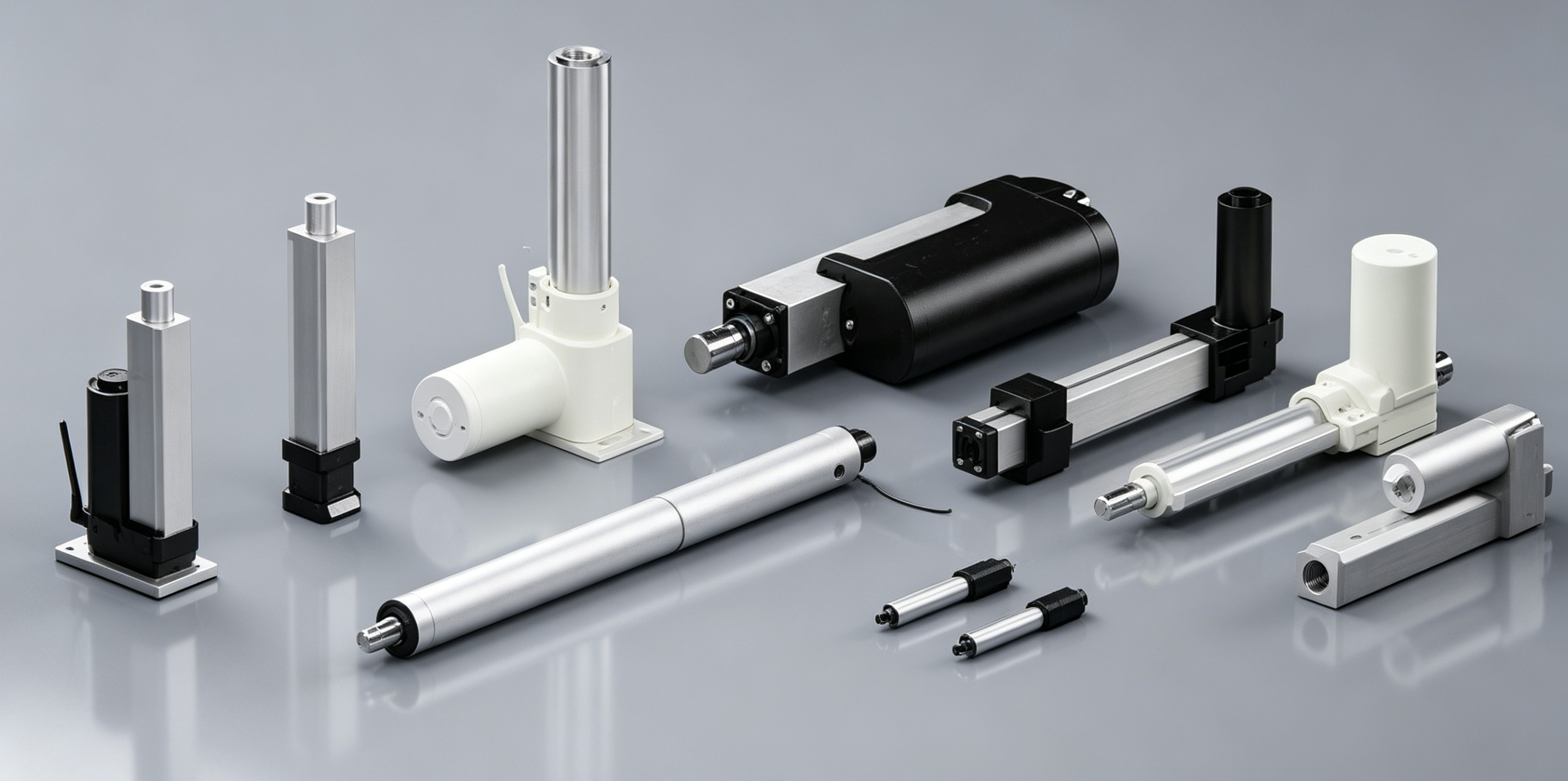
Linear actuators do not extend or retract directly driven by motors. Linear motion is realized via a three-stage transmission assembly: motor + reduction gearbox + screw-nut pair. Any performance defect of the motor will be amplified stage by stage and degrade overall unit performance.
Linear actuators do not extend or retract directly driven by motors. Linear motion is realized via a three-stage transmission assembly: motor + reduction gearbox + screw-nut pair. Any performance defect of the motor will be amplified stage by stage and degrade overall unit performance.
Rotational power from the motor flows into the gearbox. Multi-stage gears reduce rotational speed and multiply torque, converting high-speed, low-torque rotary power into low-speed, high-torque output to drive screw rotation. The screw then drives the nut assembly for linear reciprocating movement, which delivers the actuator’s extension and retraction function.
Within this system, motor stability dictates the overall failure rate of the actuator:
In addition, there exists a standard industry matching scheme: trapezoidal screws pair with brushed DC motors focusing on self-locking and low cost, while ball screws match BLDC motors for high speed, high precision and low wear.